The pilots who struggle most in the checkride oral aren't the ones who didn't study. They're the ones who studied the wrong thing.
They memorized facts. The examiner is evaluating judgment.
Those are two completely different skill sets, and most applicants don't realize the difference until they're sitting across the table from a DPE who asks them something that isn't in any study guide.
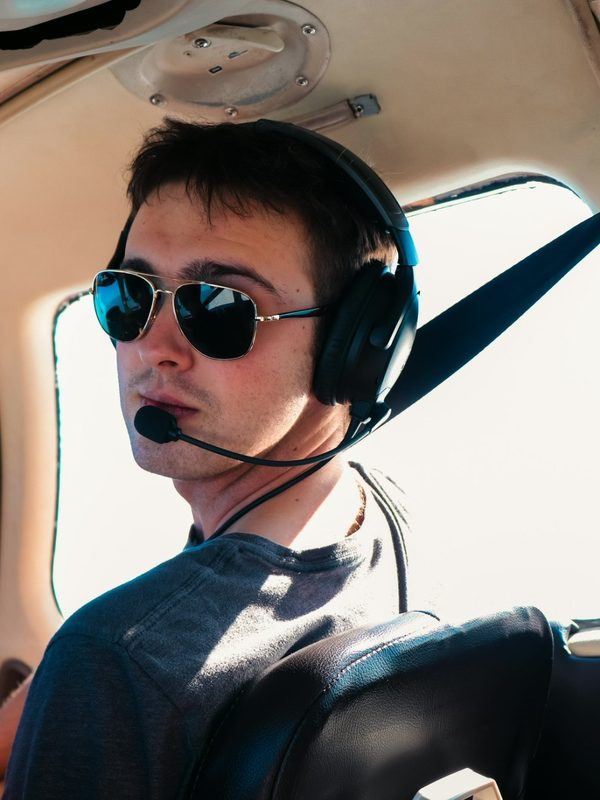
What the Examiner Is Actually Looking For
A designated pilot examiner is not trying to find out how many regulations you can recite. They're trying to determine whether you're safe to exercise the privileges of your certificate without a CFI in the right seat.
That's a fundamentally different question than "did you study."
What that means in practice: the examiner is watching how you think. When they present a scenario — deteriorating weather, an unfamiliar airport, an unusual system behavior — they want to see your decision-making process. They want to hear you reason through it, weigh the options, and arrive at a sound conclusion. A pilot who gets to the right answer through solid reasoning is far more reassuring than one who recites the correct answer without being able to explain why it's correct.
This is why applicants who prepare exclusively with study guides and question banks often get caught off guard. They know the answers. They don't know the reasoning. The moment the examiner asks a question that's slightly outside the expected format, they freeze.
The One Answer That's Always Acceptable
Here's something I tell every applicant I work with: "I don't know, but here's how I'd find out" is a perfectly acceptable answer in a checkride oral.
Examiners know you don't have every regulation memorized to the letter. What they want to know is whether you understand how to find reliable information and how to use it. A pilot who says "I'm not certain of the specific requirement off the top of my head — I'd check the AIM or pull up the relevant FAR" is demonstrating exactly the kind of airmanship the examiner is looking for. A pilot who guesses confidently and gets it wrong is not.
The instinct to never say "I don't know" is understandable. It feels like admitting failure. In a checkride oral, it's often the most honest and competent thing you can say.
What you can't do is stop there. "I don't know" on its own isn't enough. "I don't know, but I'd find out by..." shows a pilot who understands their own knowledge limits and has a process for operating safely within them. That's what passing looks like.
The Topic Most Applicants Get Wrong
If I had to pick the one area where applicants consistently show up underprepared, it's systems knowledge — and specifically, not understanding why the systems work the way they do.
Most applicants can walk through the engine start checklist. They know the procedures. What they often can't do is explain what's actually happening when they follow those steps, or what it means when something doesn't behave the way it should.
The examiner might ask what happens to oil pressure during a cold start, and why. They might ask why the ammeter shows a discharge after engine start and when that should normalize. They might ask what a rough-running engine at altitude could indicate, and what you'd do about it.
These aren't trick questions. They're the questions a pilot who actually understands their aircraft can answer. They're also the questions that separate pilots who know the checklist from pilots who understand the airplane.
The fix is to work through your aircraft's POH with genuine curiosity rather than necessity. Read the systems descriptions — not just the emergency procedures. Understand what each system does, what it depends on, and what failure looks like. When something goes on the checklist, ask yourself why it's there.
How to Actually Prepare
Start with the Airman Certification Standards, not a study guide.
The ACS for your certificate lists every area of knowledge and every task the examiner is required to evaluate. It tells you exactly what they can ask and what standard they're applying. Read it cover to cover before you open anything else. Understand what "acceptable" looks like for each task. That's the baseline you're preparing to meet.
Prepare to be pushed to the edge of your knowledge.
The examiner will keep asking follow-up questions until they find the limit of what you know. That's not a sign that you're failing — it's how the exam works. When you hit the edge, say so clearly and explain how you'd get the information you need. Don't guess. Don't bluff. The examiner has been doing this long enough to know the difference.
Work through scenarios out loud with your CFI.
The oral is a verbal exercise. Whatever you've studied needs to come out of your mouth clearly and logically under mild pressure. The best preparation is practice saying your answers out loud, working through scenarios in real time, and getting comfortable with the conversational nature of the exam. Reading doesn't prepare you for that. Talking does.
Know your weak areas before you walk in.
Your written exam results are in the examiner's hands before you arrive. They know exactly which knowledge areas you were deficient in. They will ask about those areas. If you know your systems knowledge or ADM is soft, address it before your checkride — not the night before, but in the weeks leading up to it.
Get a mock oral.
There's no substitute for sitting across from someone who's going to ask you hard questions and push back on your answers. A mock oral with your CFI — conducted like the real thing, no hints, no easy passes — is the most effective preparation you can do in the final week before your checkride.
The Day Of
Show up with every document in order. Your examiner will check your paperwork before they ask you a single question. Missing or expired documents end the checkride before it starts.
Come in rested. The oral typically runs one to two hours before you get in the airplane. Fatigue affects how you think, and thinking is what the oral is testing.
Speak clearly and completely. If you don't understand a question, ask for clarification. If you need a moment to think, take it. The examiner isn't timing your response — they're evaluating the quality of it.
And remember: the examiner wants you to pass. They're not sitting across from you hoping to find a reason to fail you. They're trying to determine whether you're ready. Go in ready, and the oral takes care of itself.
Preparing for a checkride? My checkride prep sessions cover the full ACS oral review, scenario practice, and mock oral — so you walk in knowing exactly what to expect. $120 per session at andrewserrazina.com/checkride-prep.