When I was learning the power off 180 for my commercial certificate, I had a problem that I've since seen in almost every pilot I've taught this maneuver to.
I didn't trust the airplane.
The moment the power came out over the numbers, my instinct was to turn direct to the runway immediately. Every time I did that, I ended up the same way: too high, too fast, blowing past my touchdown point with no good options left. It felt like I was doing something right — I was pointed at the runway, I could see the numbers — but I was working against the airplane instead of with it.
The fix wasn't a technique change. It was a mindset change. Know your airplane. Trust your airplane. Trust yourself.
That shift is what this maneuver is actually teaching you.
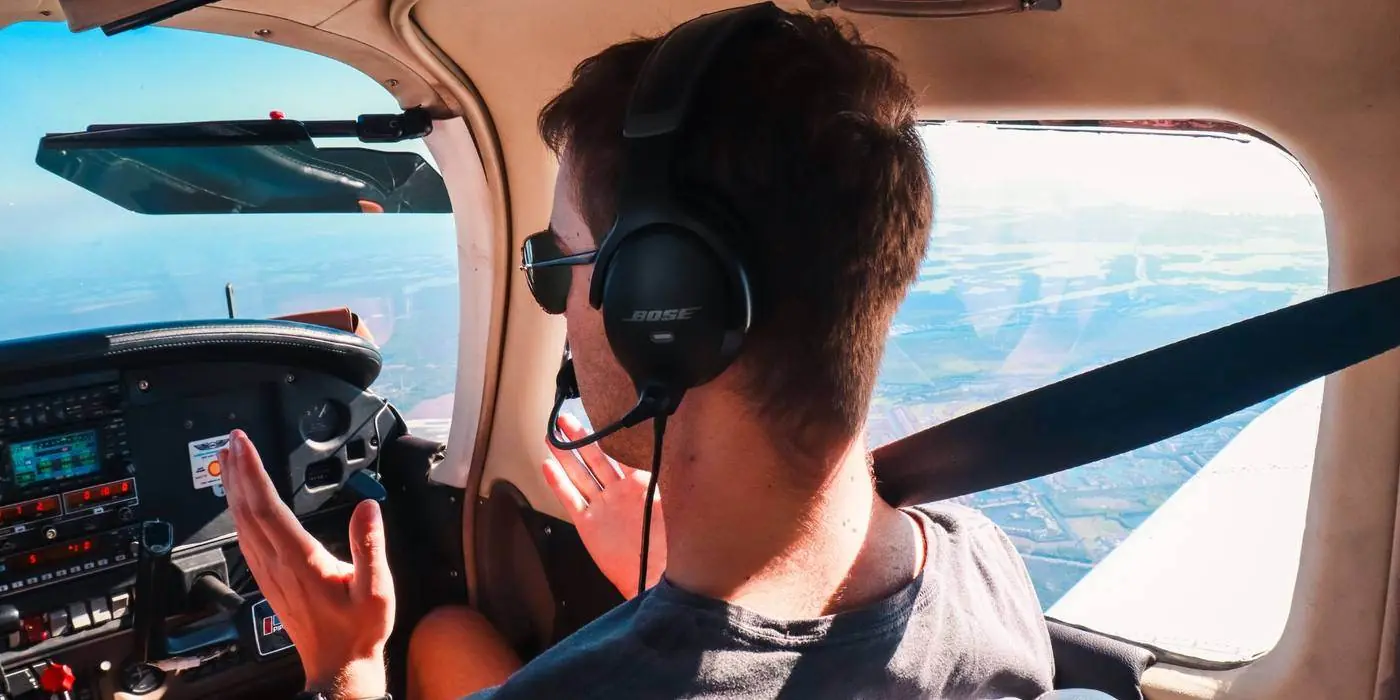
What the Power Off 180 Actually Is
The power off 180 is a commercial pilot maneuver requiring you to bring the aircraft from abeam the numbers on the downwind leg to a touchdown within 200 feet of a designated point — with the engine at idle the entire way.
No power corrections on final. No go-around. Just the aircraft, the wind, and your judgment.
Under the ACS, you need to be within 200 feet of the touchdown point. But the real standard is tighter than that — a well-executed power off 180 puts the airplane on the numbers consistently, not within 200 feet of them.
Why It Matters Beyond the Checkride
Every certificated pilot should understand this maneuver, not just commercial applicants.
Here's why: the power off 180 directly simulates an engine failure on downwind. That's one of the highest-workload, most time-critical scenarios in general aviation — and the pattern is exactly where it tends to happen, because the engine is working hardest during climb-out and most pilots are flying low and slow.
A pilot who has practiced power off 180s has also been practicing the judgment and muscle memory for that exact scenario. They know what the airplane looks like on a power-off approach. They know how much altitude they'll lose in a turn. They know where to aim. They've done it dozens of times.
Beyond the safety argument, the power off 180 exposes weaknesses in aircraft control that power masks. When you have the option to add power, sloppy technique doesn't show up as clearly. Take the power out and suddenly poor airspeed control, over-controlling on the controls, and weak pattern awareness all become obvious. Pilots who learn this maneuver well come out the other side with a noticeably cleaner overall technique.
The Procedure — Step by Step
1. Establish normal downwind Set up your normal traffic pattern downwind at pattern altitude. Airspeed and altitude should be stabilized before you reach the abeam position.
2. Abeam the numbers — power to idle When you're abeam your touchdown point, reduce power to idle. Simultaneously begin your normal landing configuration — carb heat on, reduce to approach speed, flaps as appropriate per your aircraft's POH.
In the PA-28, I typically extend some flap here but hold the rest until I have the field made. Your aircraft and conditions will determine the right sequence — know your airplane before you fly this maneuver.
3. Fly a normal pattern — resist the urge to turn early This is where most pilots get into trouble. The instinct is to turn immediately toward the runway when the power comes out. Don't.
Continue tracking the downwind briefly, then begin your base turn at your normal base turn point — adjusted for winds. You need time and space to manage your energy. A premature turn robs you of both. If you turn direct to the runway from abeam the numbers, you'll arrive too high with nowhere to put the energy.
4. Manage energy on base On base, you're managing your descent rate and airspeed simultaneously. Watch your energy state, not just the runway. The question isn't "am I pointed at the runway" — it's "do I have the right amount of energy to arrive at the right point."
If you're high, extend flaps to increase drag and steepen the descent. If you're low, fly a tighter base. Don't use power — that's the whole point.
5. Final — nail the airspeed, grease the landing Roll out on final lined up with the runway and stabilized on approach speed. The last few hundred feet should look and feel like any other normal landing approach, except the engine is at idle.
Flare normally. Don't force it on. The aircraft will land.
The Most Common Mistake
Pilots focus on the numbers instead of the energy state — and those are two very different things.
Staring at the touchdown point and flying directly toward it is a reactive approach. You're chasing the picture instead of managing the aircraft. Energy management is proactive. You're thinking about where you are in the glide, what your options are, and what inputs you need to make right now so the picture is correct in 30 seconds.
The pilot who turns immediately toward the runway is reacting. The pilot who holds downwind a beat longer, turns a proper base, and arrives on final with the right energy is managing. One of those pilots lands consistently on the numbers. The other lands somewhere in the first third of the runway — if they're lucky.
The Mindset That Makes It Click
When I finally started flying this maneuver well, I stopped thinking about the numbers and started thinking about the glide.
Where is the airplane in relation to where it needs to be? Do I have too much energy or not enough? What does the picture look like right now compared to where it should be?
The answers to those questions drive every input. The touchdown point is the reference — not the destination you fly directly toward.
Trust that the airplane can glide. It can. The PA-28 has a decent glide ratio and if you fly it at the right speed and don't fight it, it will take you where you need to go. The pilot's job is to not get in the way.
Know your airplane. Trust your airplane. Trust yourself. The rest follows.
Working toward your commercial certificate or want to sharpen your pattern flying? I instruct out of KBAF in Springfield, MA in the PA-28 family. Book a session at andrewserrazina.com.