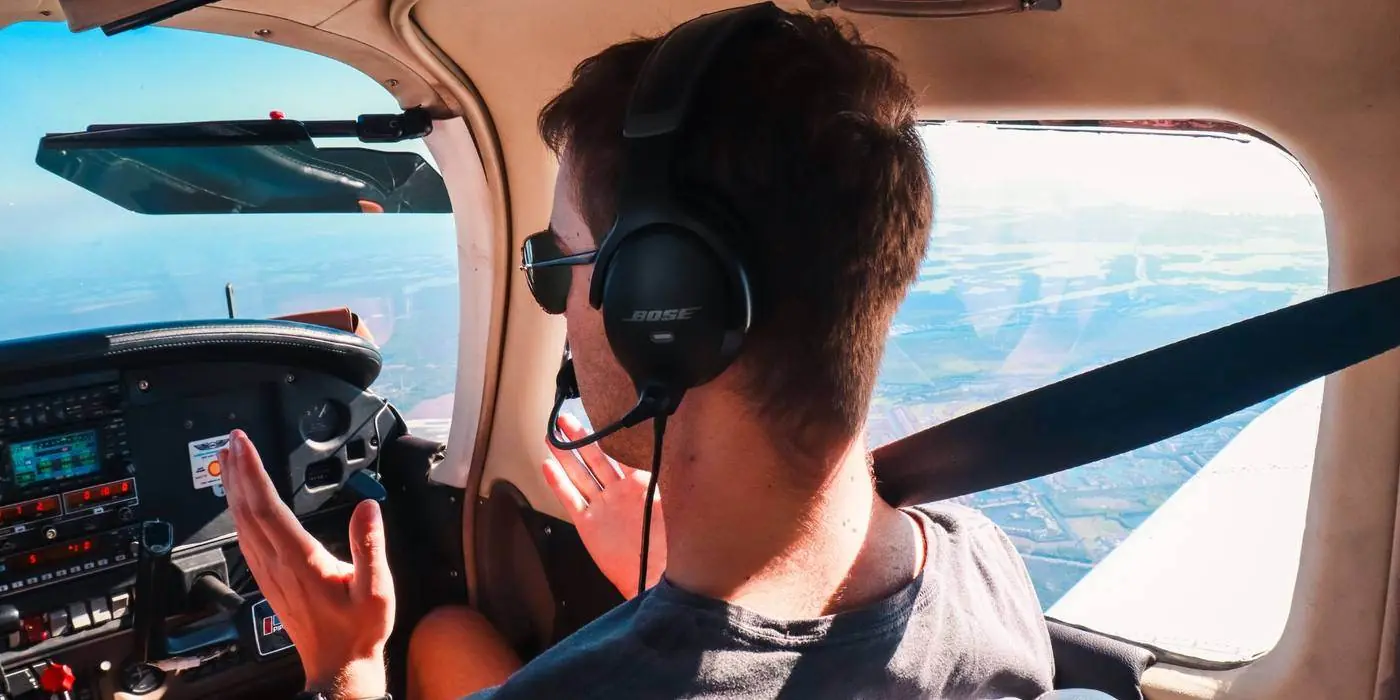
The most common thing I hear from pilots before a flight review is some version of: "I'm just hoping I don't fail."
That's the wrong way to think about it — and it's worth clearing up before you ever show up, because the anxiety that comes from misunderstanding what a flight review actually is makes the whole thing harder than it needs to be.
A flight review is not a test. There's no grade, no score, and no official failure on record if things don't go well. It's a regulatory requirement under 14 CFR 61.56 — one hour of ground instruction and one hour of flight — designed to make sure you're still safe to exercise the privileges of your certificate. That's it. Your CFI isn't trying to catch you out. They're trying to make sure you're okay to fly.
Here's what actually happens.
The Ground Portion
The ground portion is a conversation, not a quiz. A good CFI isn't going to fire obscure regulatory questions at you hoping you stumble. They want to know that you understand the rules that govern your actual flying — the airspace you operate in, the currency requirements you need to meet, the weather minimums relevant to how you fly.
Expect the discussion to cover things like currency requirements, airspace, aircraft systems, weather, and any regulatory changes since your last review. The tone should feel like two pilots talking, not a student being examined.
If you're rusty on something during the ground portion, say so. That's exactly the kind of information your CFI needs to make the flight useful for you.
What to Bring
Show up with your pilot certificate, medical certificate or BasicMed documentation, your logbook, the aircraft POH, and a current sectional for your area. If you're instrument rated, bring your instrument currency records too.
If you haven't flown recently, be upfront about it before you even arrive. A CFI who knows you've been away for 18 months will structure the review differently than one who thinks you flew last month — and the version built around your actual situation will be more useful.
The Flight Portion
This is where most pilots' anxiety is concentrated, and it's almost always unwarranted.
Your CFI isn't looking for precision aerobatics. They're evaluating whether you can operate the aircraft safely as pilot in command — whether your preflight is thorough, whether your situational awareness is intact, whether your basic airwork is acceptable, whether your landings are consistent.
In my experience, the rust shows up in a predictable place: emergency procedures. Pull the power unexpectedly during a training flight and you'll see it immediately. Pilots who've been current and flying regularly react quickly and correctly. Pilots who've been away for a while go quiet for a beat — the memory is there, but the automatic response isn't. That's not a failing. It's just what happens when skills haven't been practiced. It's also exactly the kind of thing a flight review is designed to surface and address.
Beyond emergencies, expect traffic pattern work, some airwork, and multiple landings. The specific maneuvers vary by CFI and by how the flight is going, but the goal throughout is the same: does this pilot have what they need to fly safely?
What Happens If You're Rusty
You will be rusty. Most pilots coming in for a flight review are. It's fine.
A CFI conducting a flight review worth anything will adapt to where you actually are, not where you're supposed to be. If the first landing is rough, you'll do more landings. If your emergency procedures are slow, you'll work through them until they're not. The review extends as long as it needs to.
What makes this work is honesty. If you know your instrument scan has gone soft, say so before you get in the airplane. If you haven't done a soft-field landing in four years, mention it. Your CFI can only work with what they know, and the pilots who get the most out of a flight review are the ones who come in willing to be honest about their weak spots.
What Happens If You're Not Endorsable
If a CFI doesn't feel you've demonstrated the proficiency needed for an endorsement, they don't sign your logbook. There's no failed review on record anywhere. You schedule more flight time, work on the areas that need it, and come back when you're ready.
This is genuinely rare for pilots who approach the review honestly. It's more common when someone overstates their recent experience or is unwilling to acknowledge weak areas during the flight. The system is designed to be supportive — not punitive.
The Logbook Endorsement
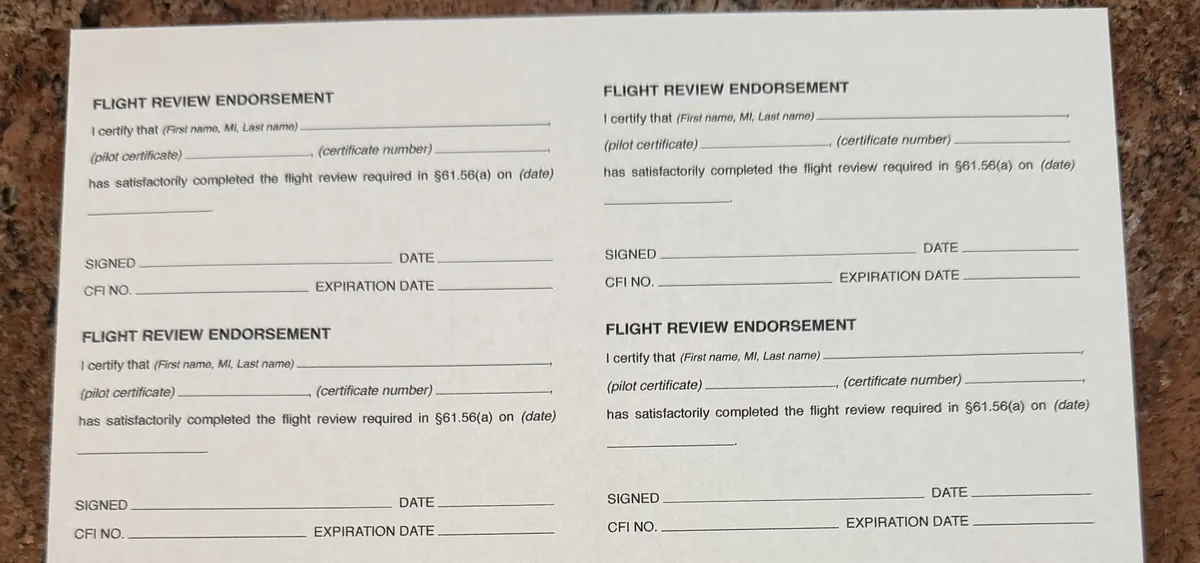
When your CFI is satisfied, they endorse your logbook. The language is straightforward — something like "I certify that [name] has satisfactorily completed a flight review in accordance with 14 CFR 61.56" — along with their signature and certificate number.
That endorsement runs for 24 calendar months from the month it's given. April 2026 means you're current through the end of April 2028.
One thing worth knowing: the FAA doesn't require you to keep a logbook, and your CFI doesn't report the endorsement anywhere. The flight review is between you and your CFI. Your logbook is your only record of it.
How to Make the Most of It
Fly before you show up. Even one solo flight in the week before your review makes a meaningful difference. The rust comes off fast once you're in the airplane — your CFI will notice, and you'll feel more confident.
Review the regulations. Not all of Part 91 — just the rules that apply to how you actually fly. Currency requirements, airspace, VFR weather minimums. Spend an hour on those before your ground portion.
Know your aircraft. Pull out the POH and spend some time with the emergency procedures checklist specifically. Know where the information is. Know what you'd do if the engine quit on departure.
Don't schedule it under time pressure. A flight review that gets rushed because you have somewhere to be afterwards is a worse experience for everyone. Give yourself a full half day, pick a day with good weather, and come in ready to actually fly.
I conduct flight reviews out of KBAF in Springfield, Massachusetts. If your flight review is coming due — or already overdue — book online at andrewserrazina.com. Live availability, $150 per session.